PHYSICAL PRODUCT DEVELOPMENT
Speakers Built From Scratch For Better Everyday Listening
Role
- Designer
- Builder
Materials
- MDF
- Online components
- DSP board
Software
- SigmaStudio
Overview
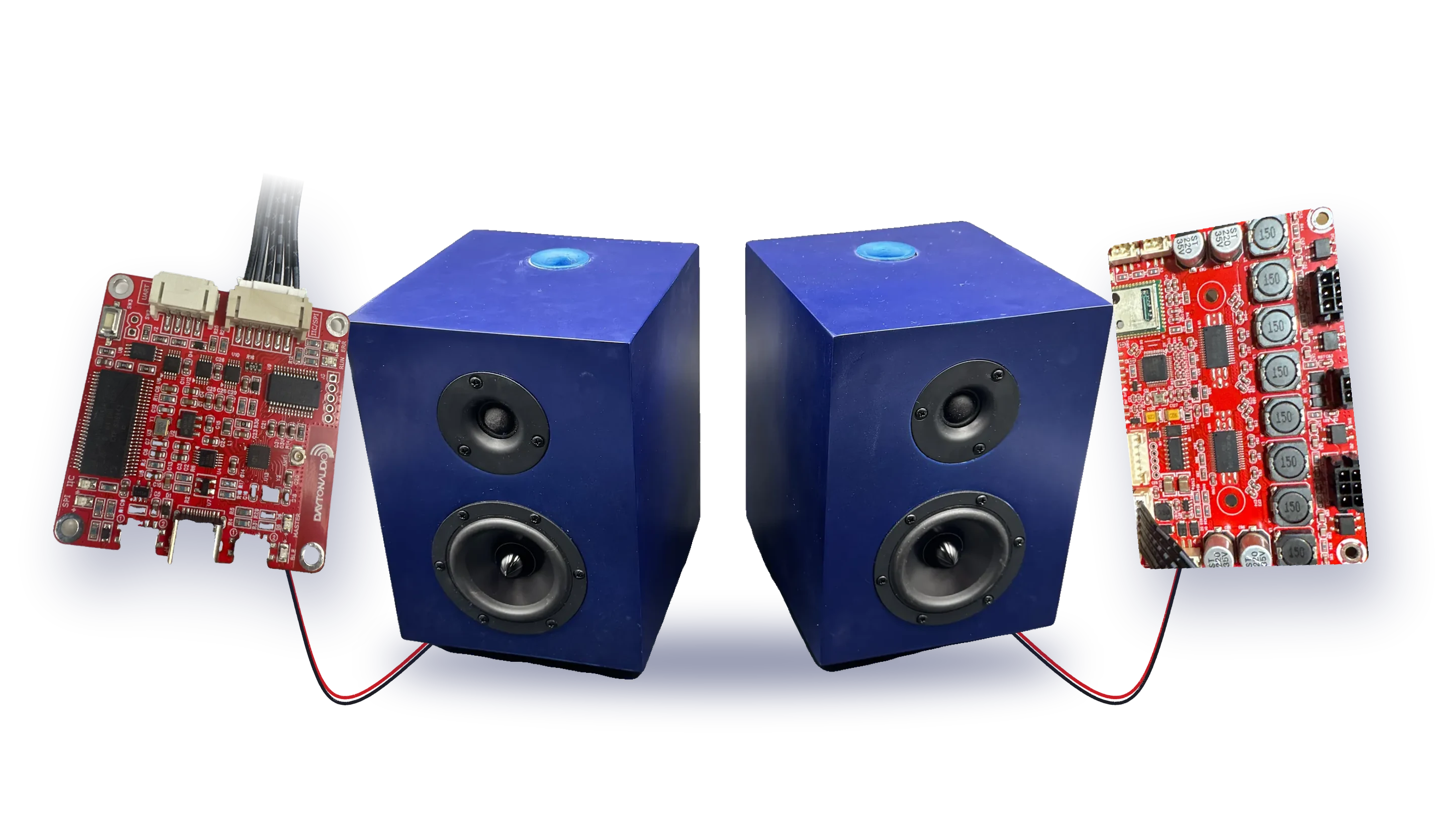
I wanted to treat a pair of speakers as a UX project, so I designed and built them around how people actually listen day to day. The enclosures are made from scratch, the drivers and parts came from online suppliers, and I wired the electronics myself. Buttons on the speaker switch between listening modes, so the sound can change along with whatever you’re doing.
Turning Speakers Into a UX Project
I wanted to approach speakers the way I’d approach any UX project, by starting with the people who use them. The best place to start was what I already knew: how I use my own.
What I Noticed
I bring my speaker everywhere, and the way I use it keeps changing: different rooms, different music, different people around. But there’s no easy way to change how it sounds to fit what I’m doing, so it sounds the same every time. That gap became the problem I designed around.
Designing the Listening Experience
My answer was listening modes. Instead of one fixed sound, you can switch between modes with the buttons on the speaker. Each mode has its own EQ, so switching actually changes how the music sounds.
What It Needed to Do
Change With the Moment
Every mode should make a difference you can actually hear.
Switch in One Press
Buttons right on the speaker, so changing modes doesn’t interrupt the listening.
Fit in Anywhere
A soft, everyday look instead of raw wood and wires.
Use Parts Anyone Can Get
Drivers and components ordered online, so the build stays reachable for a regular maker.
What Happens When You Press a Button
- You
Press a Button
The speaker switches to a different listening mode.
- DSP board
Switches the EQ
It changes to that mode’s settings, programmed in SigmaStudio.
- Amplifier board
Powers It
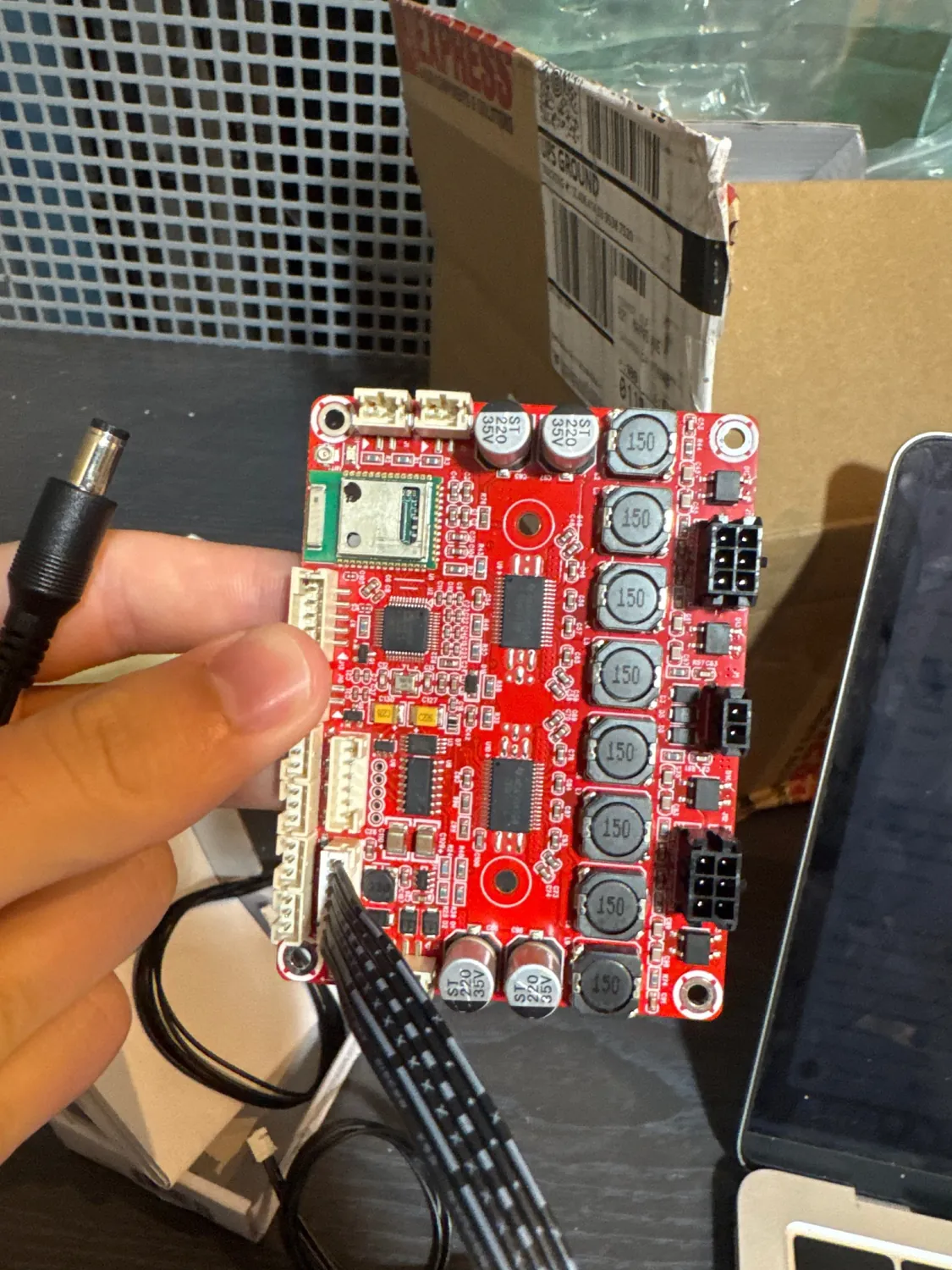
It drives the tweeter and woofer with the new signal.
- Tweeter and woofer
Play It Back
The music sounds different, shaped by the mode you picked.
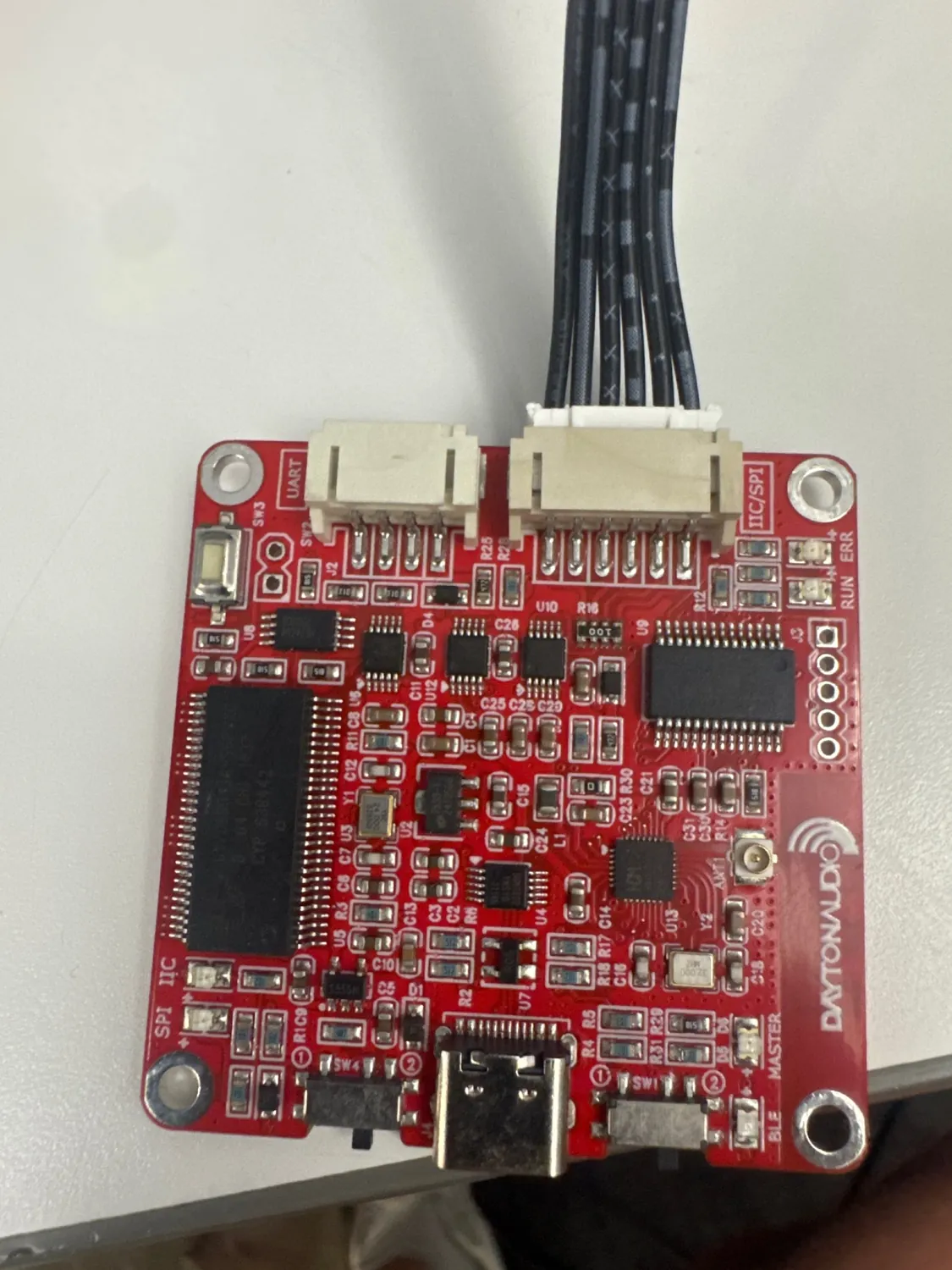
SigmaStudio is Analog Devices’ graphical tool for programming its DSP audio chips.
Building It From Scratch
With the experience planned out, I built every part of it myself, from the enclosures to the electronics to the finish.
The Enclosures
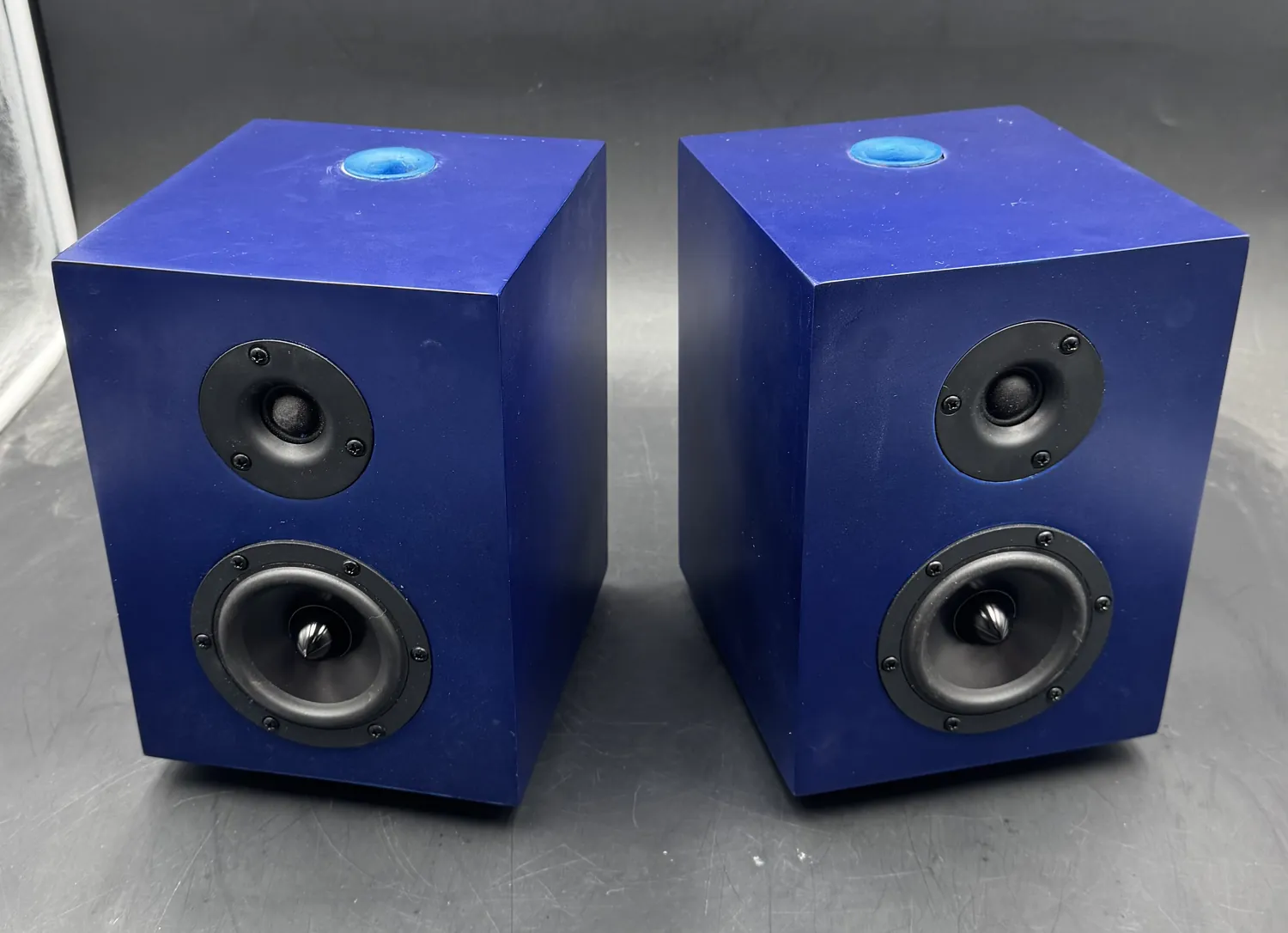
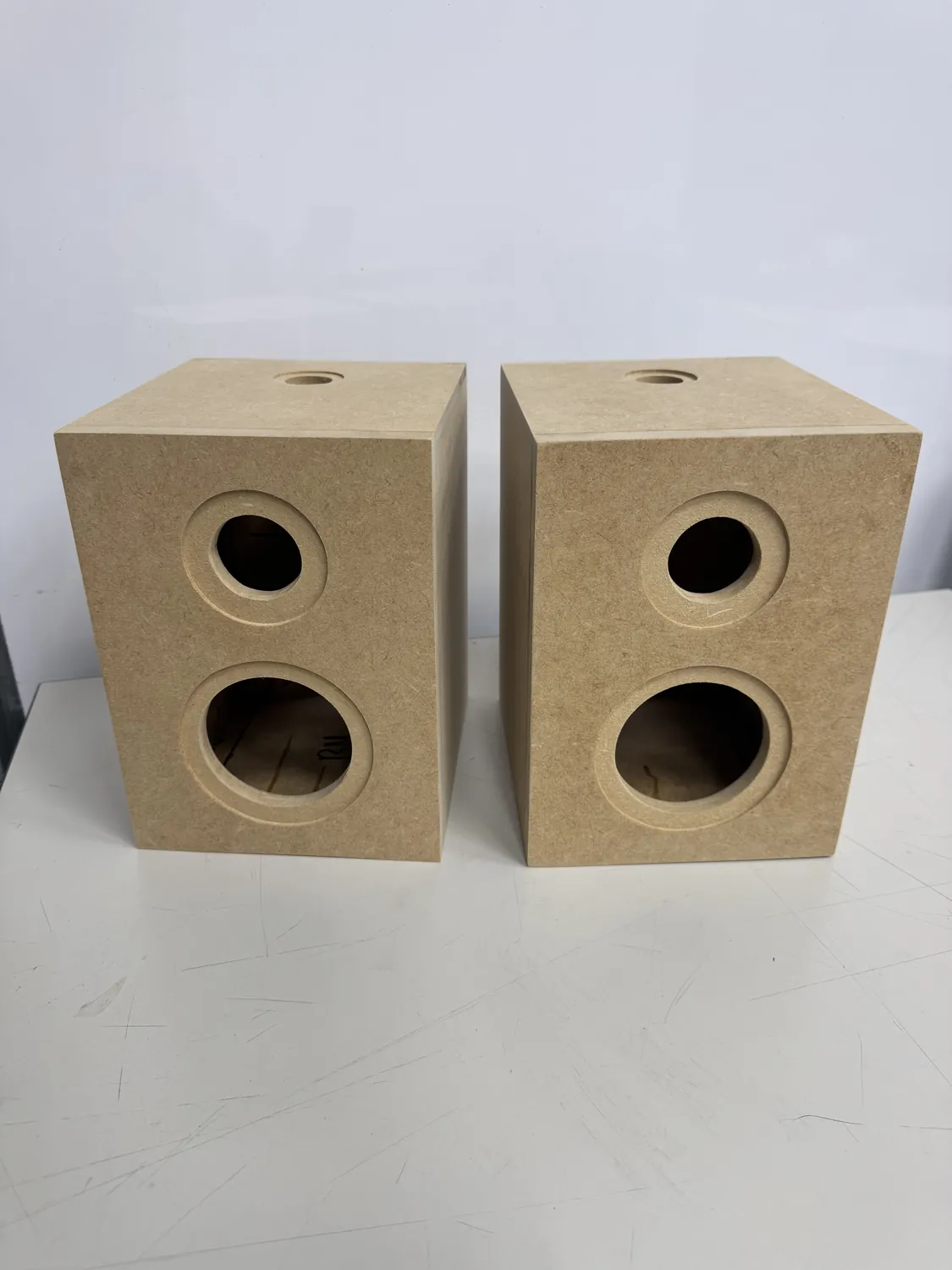
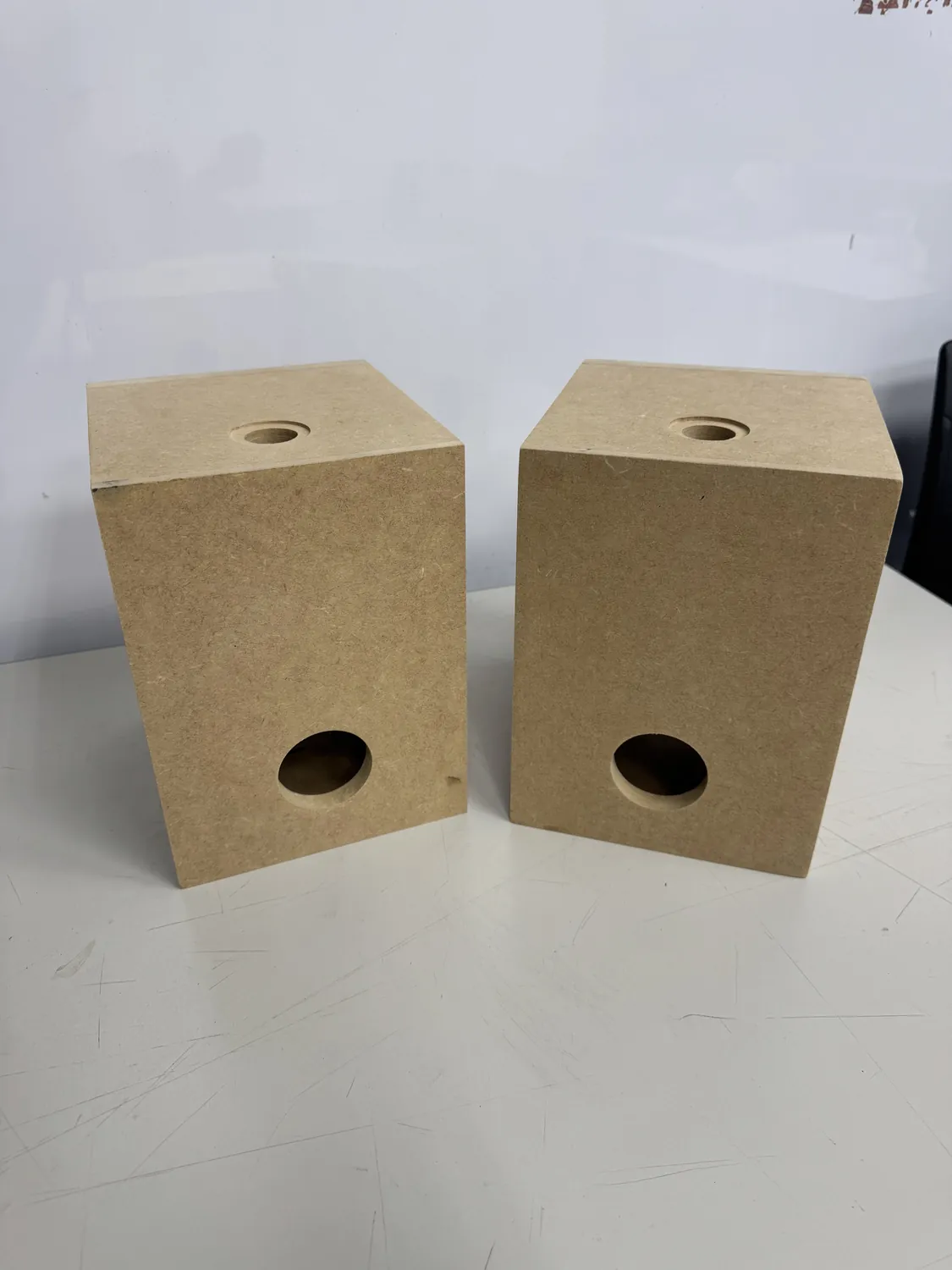
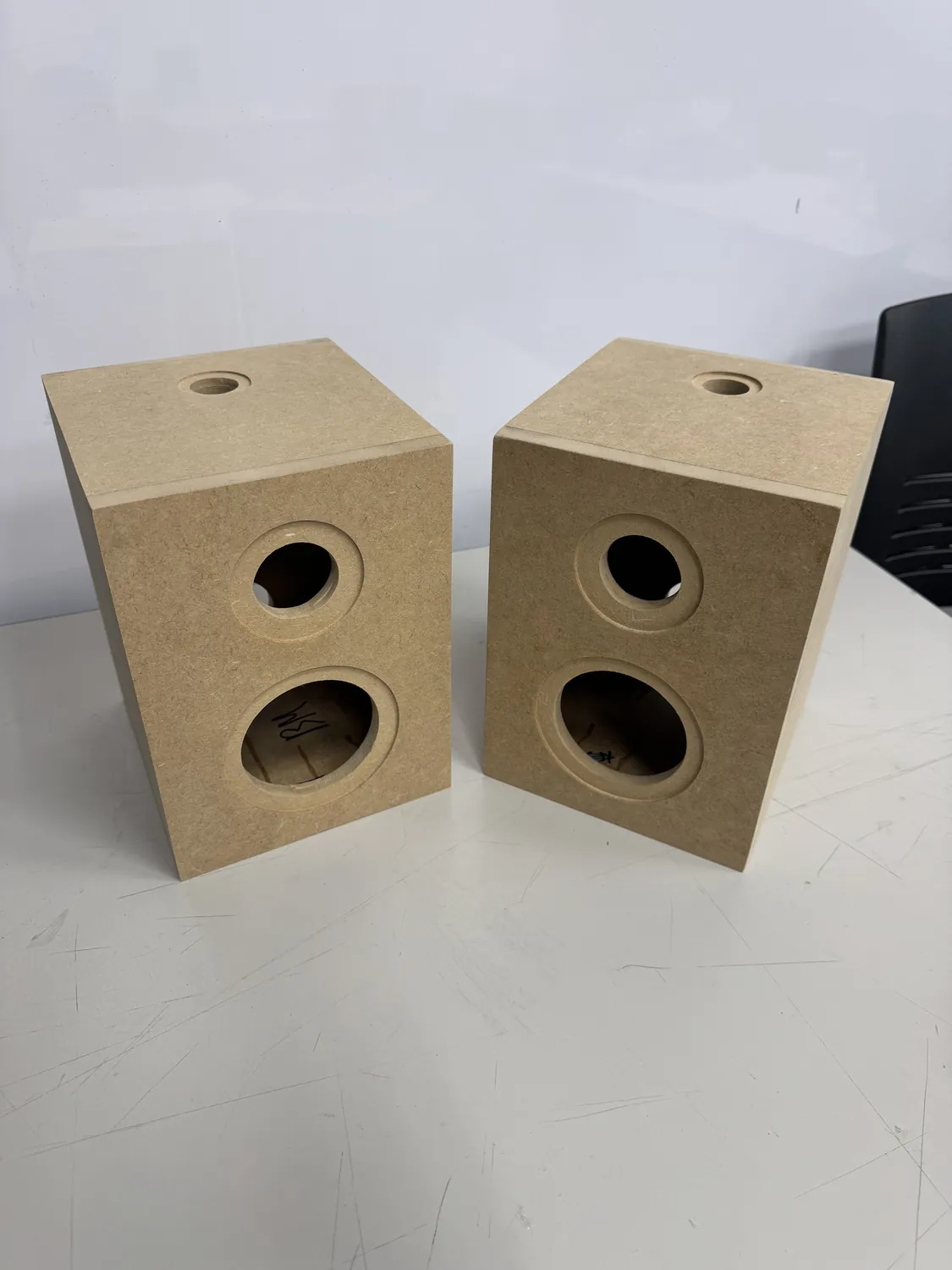
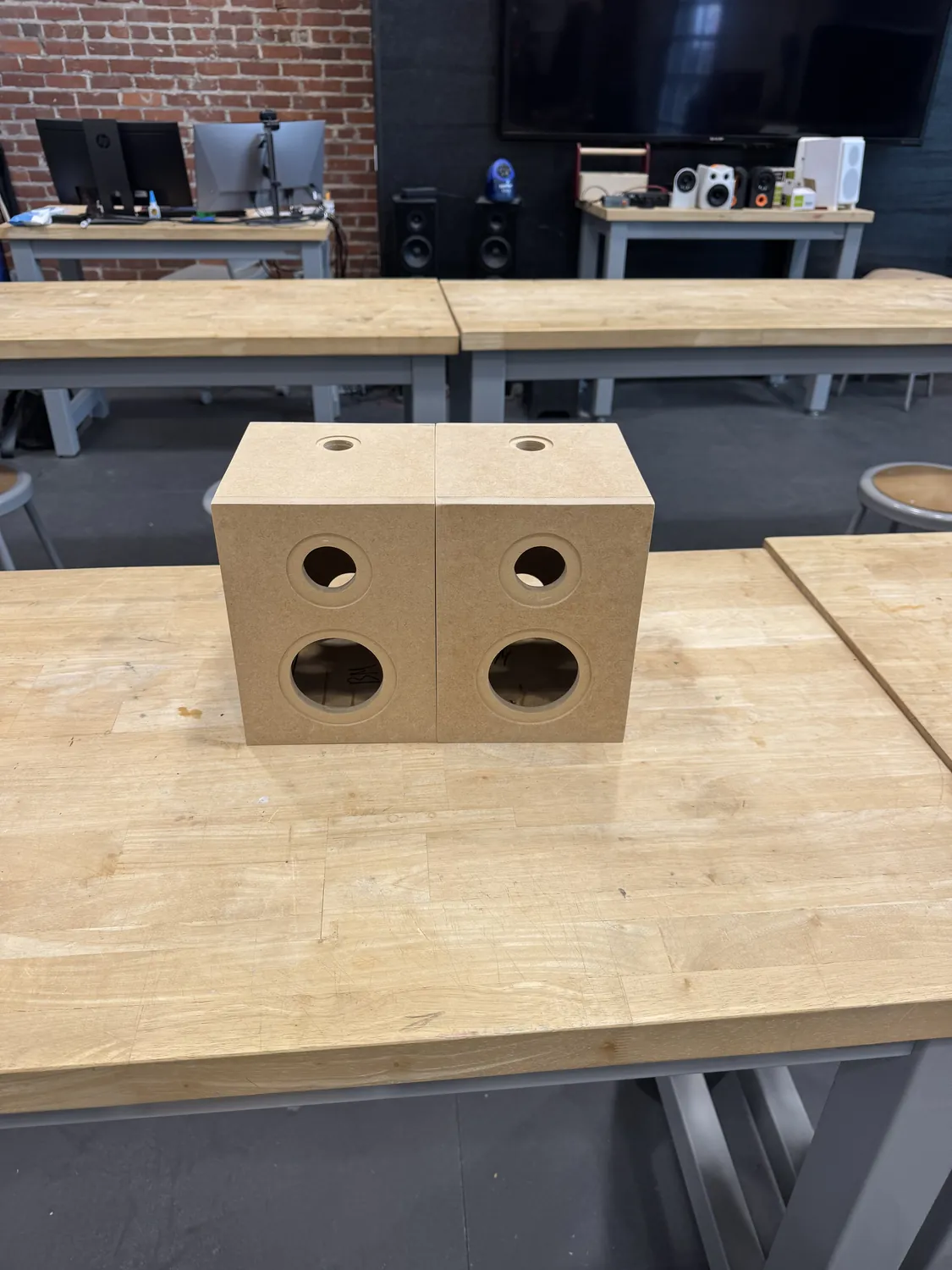
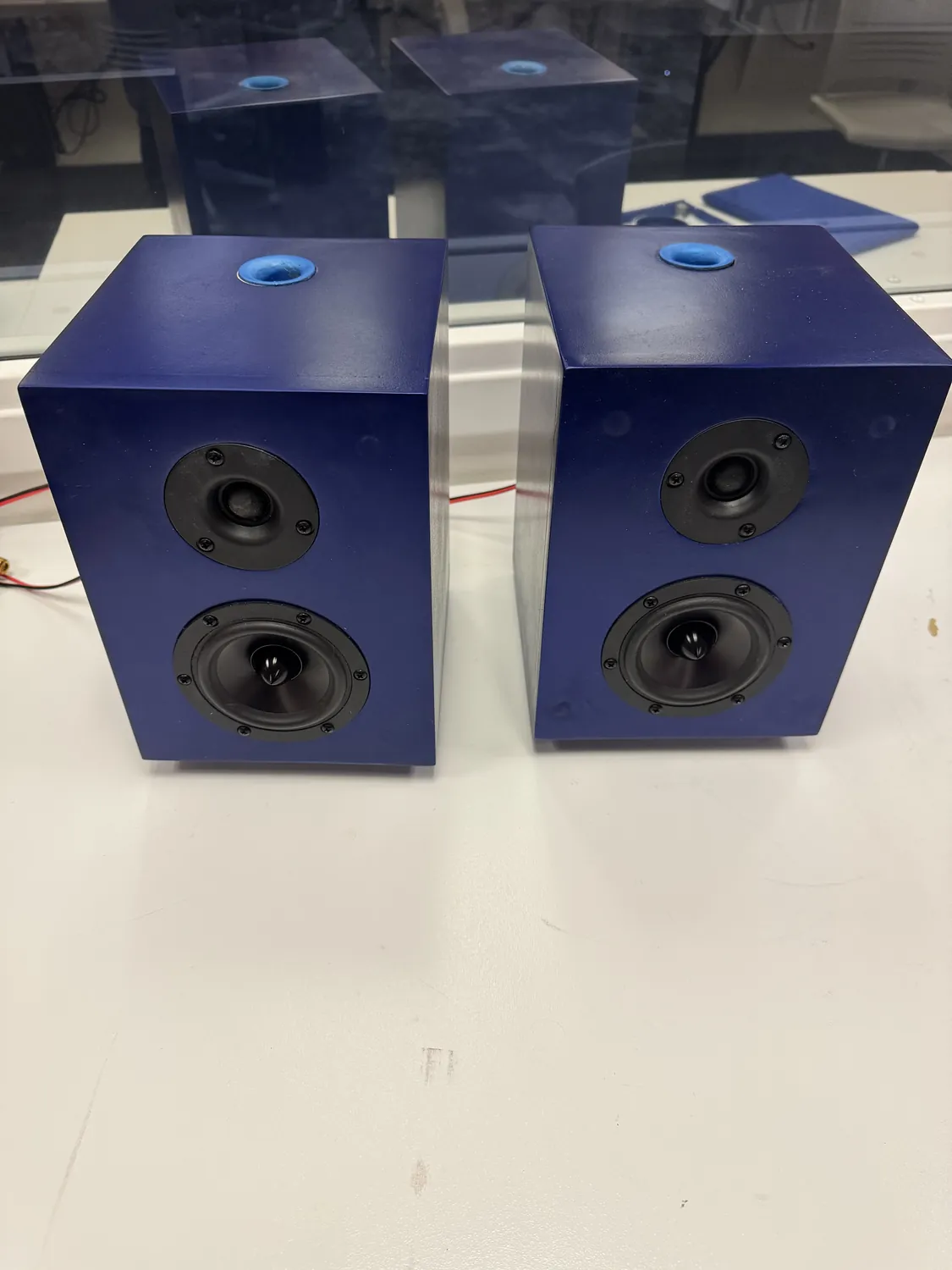
Cut and built from MDF, with openings for a tweeter and a woofer on the front and a round opening on the back.
The Electronics
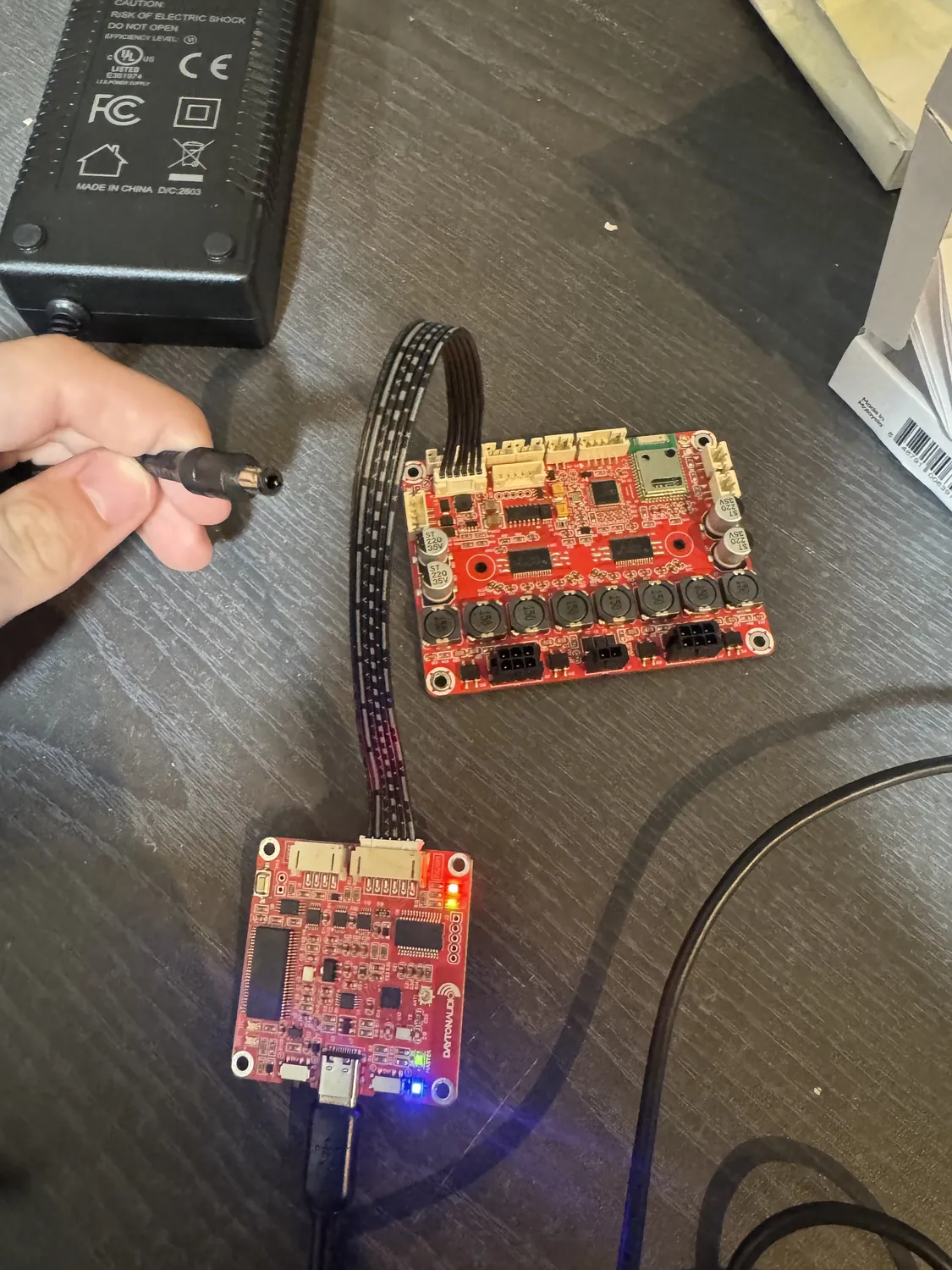
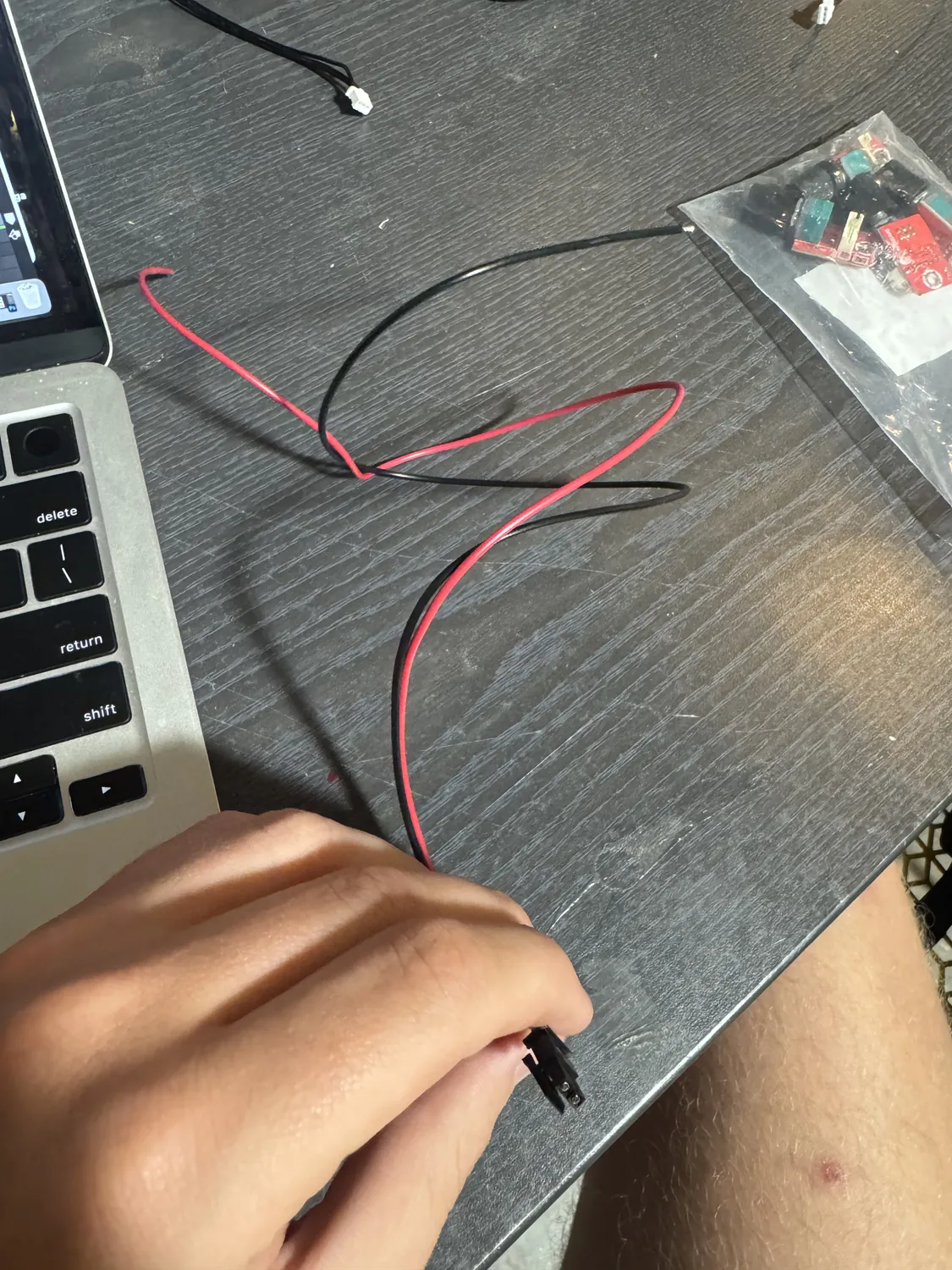
I wired the amplifier and DSP boards by hand, programmed the listening modes in SigmaStudio, and tied them to the buttons.
The Finish
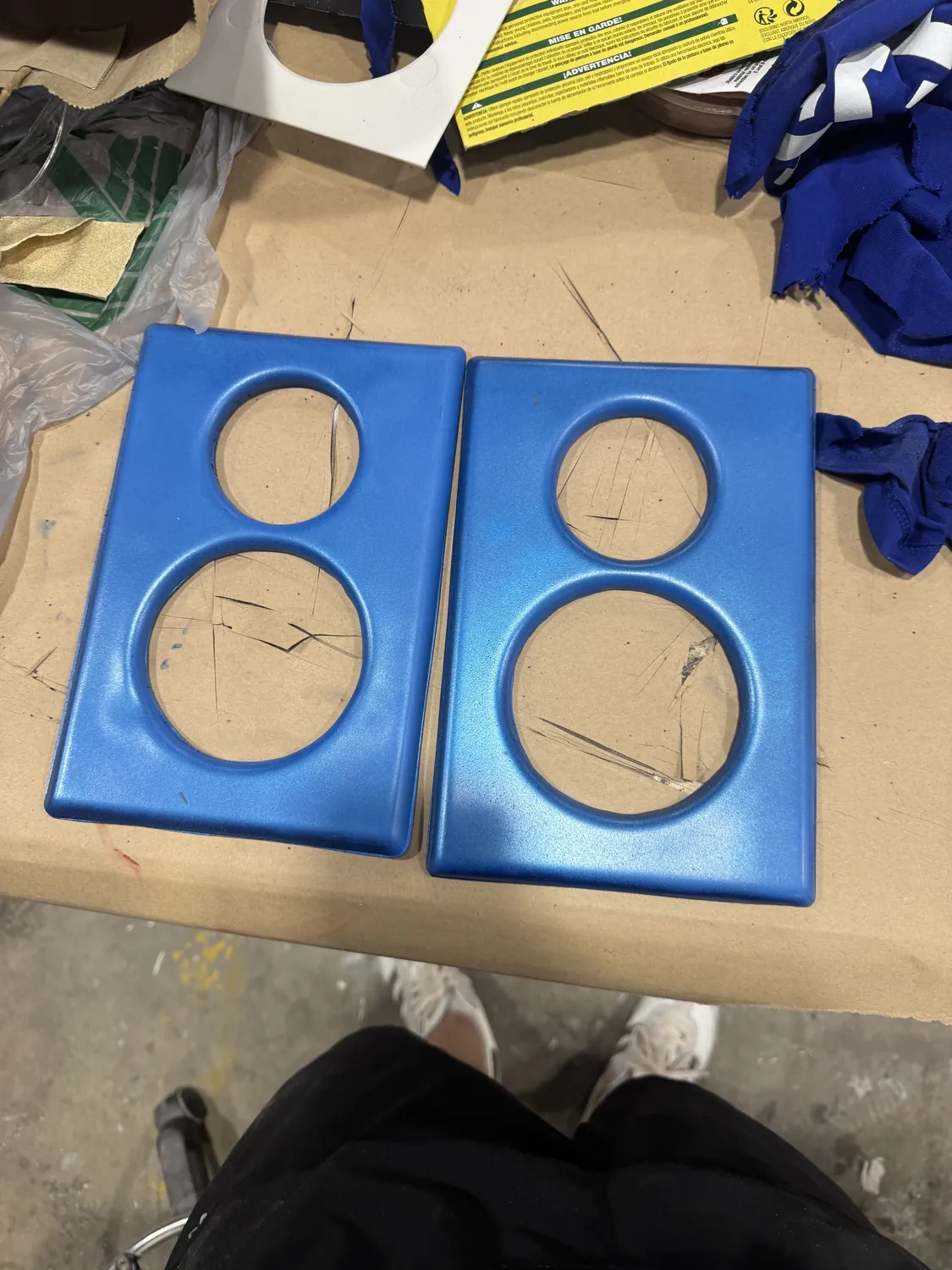
A blue finish and fabric covers give the speakers a softer, more everyday look than raw MDF, so they fit in wherever they end up.
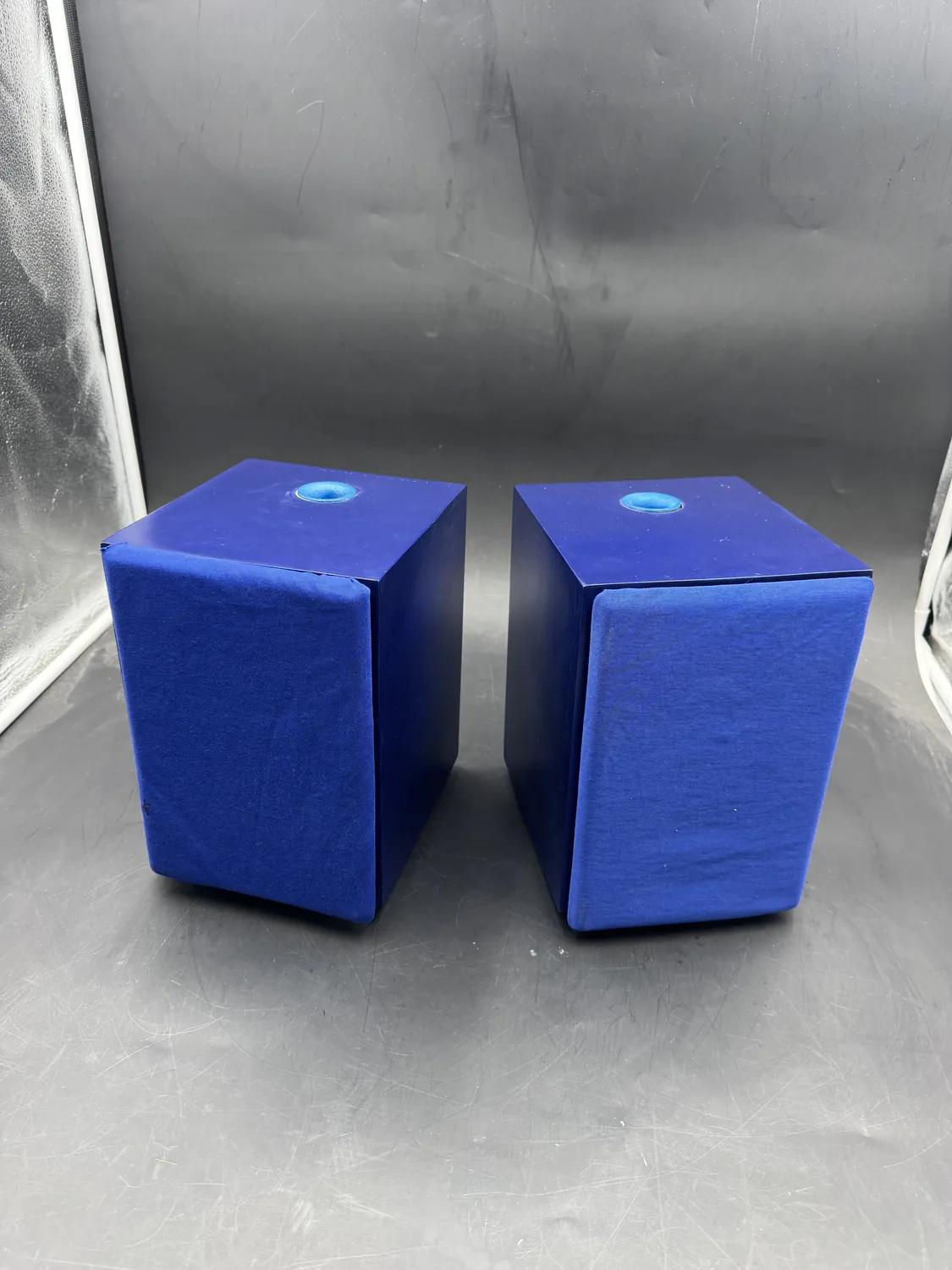
The Finished Pair
A pair of speakers designed around how people listen, with a sound that can change when the moment does.