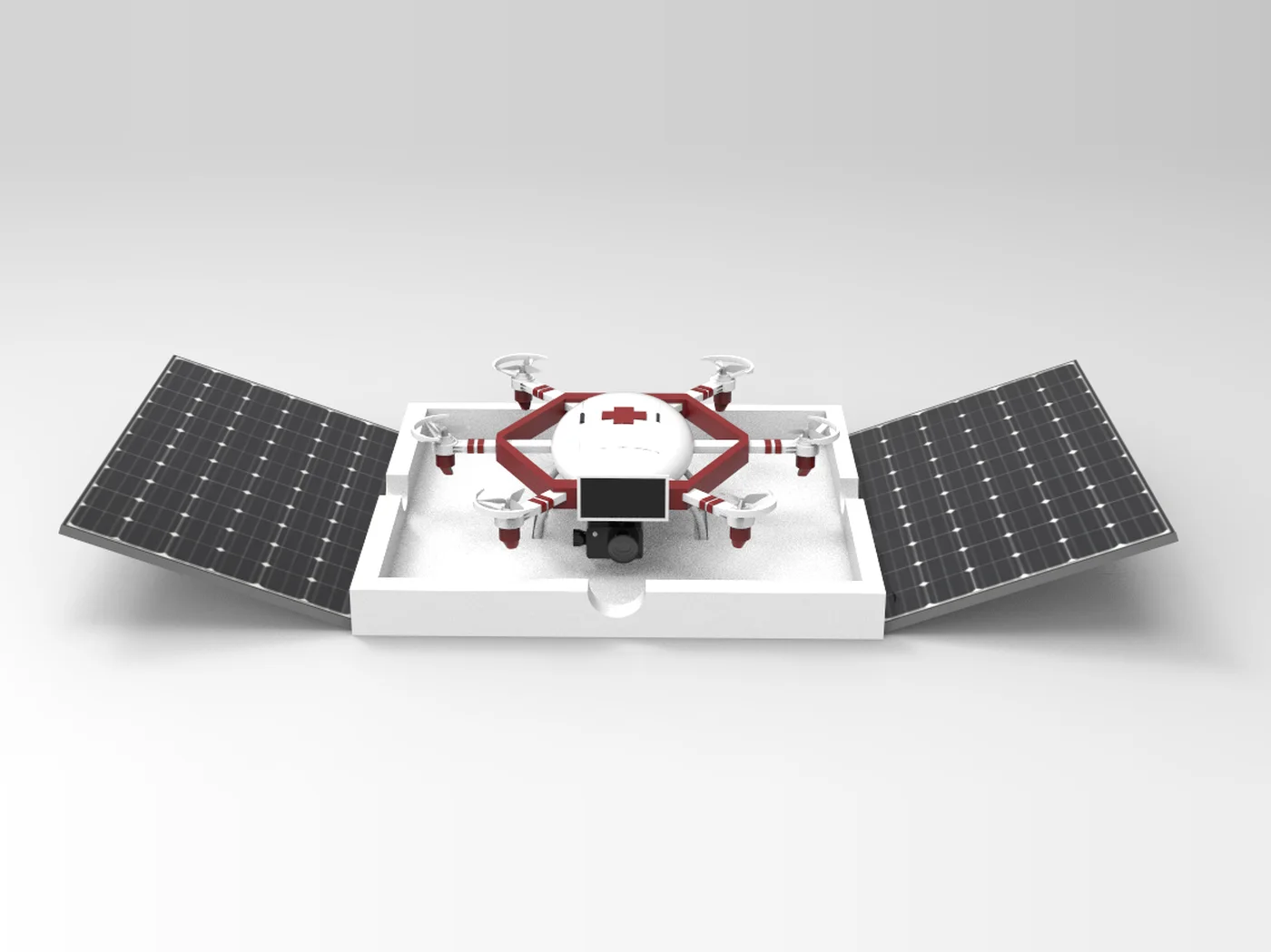
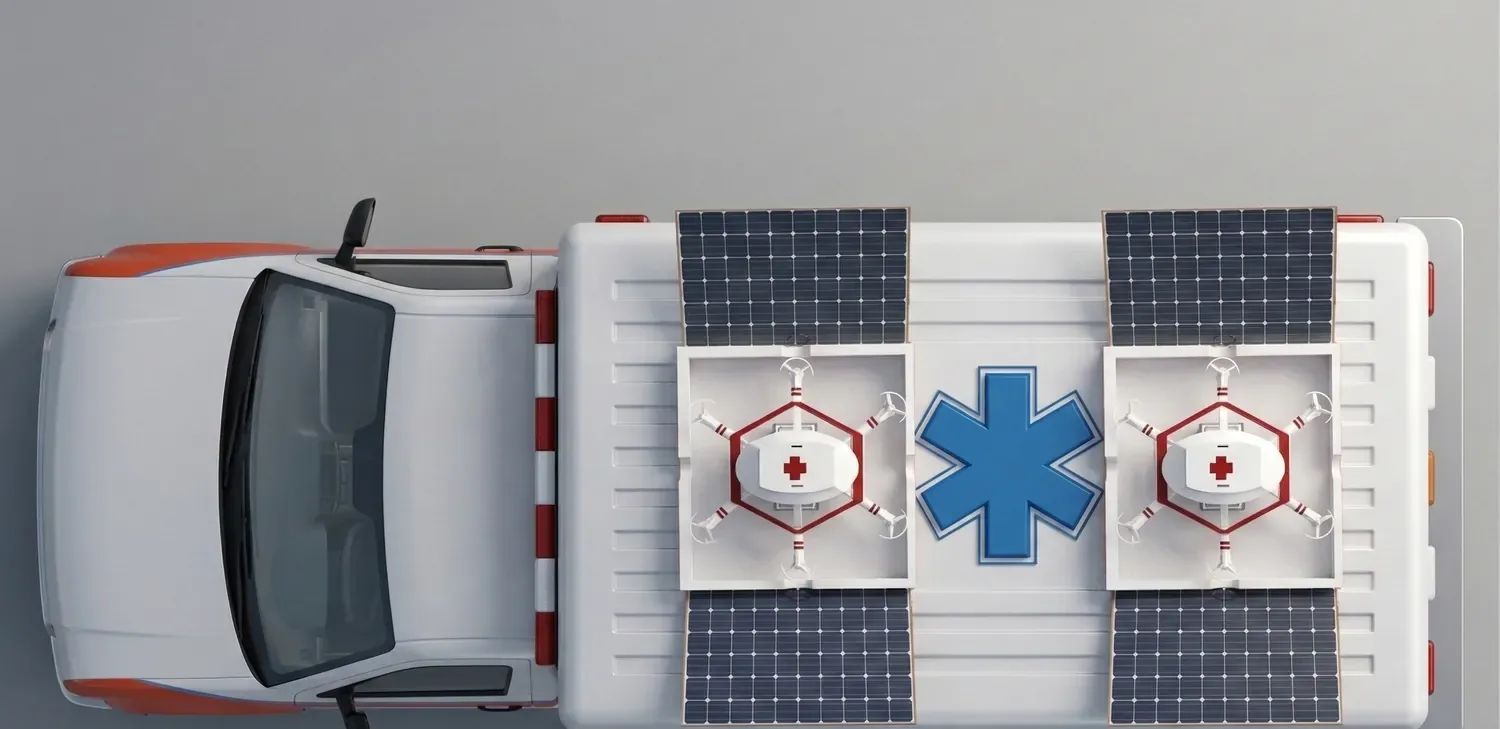
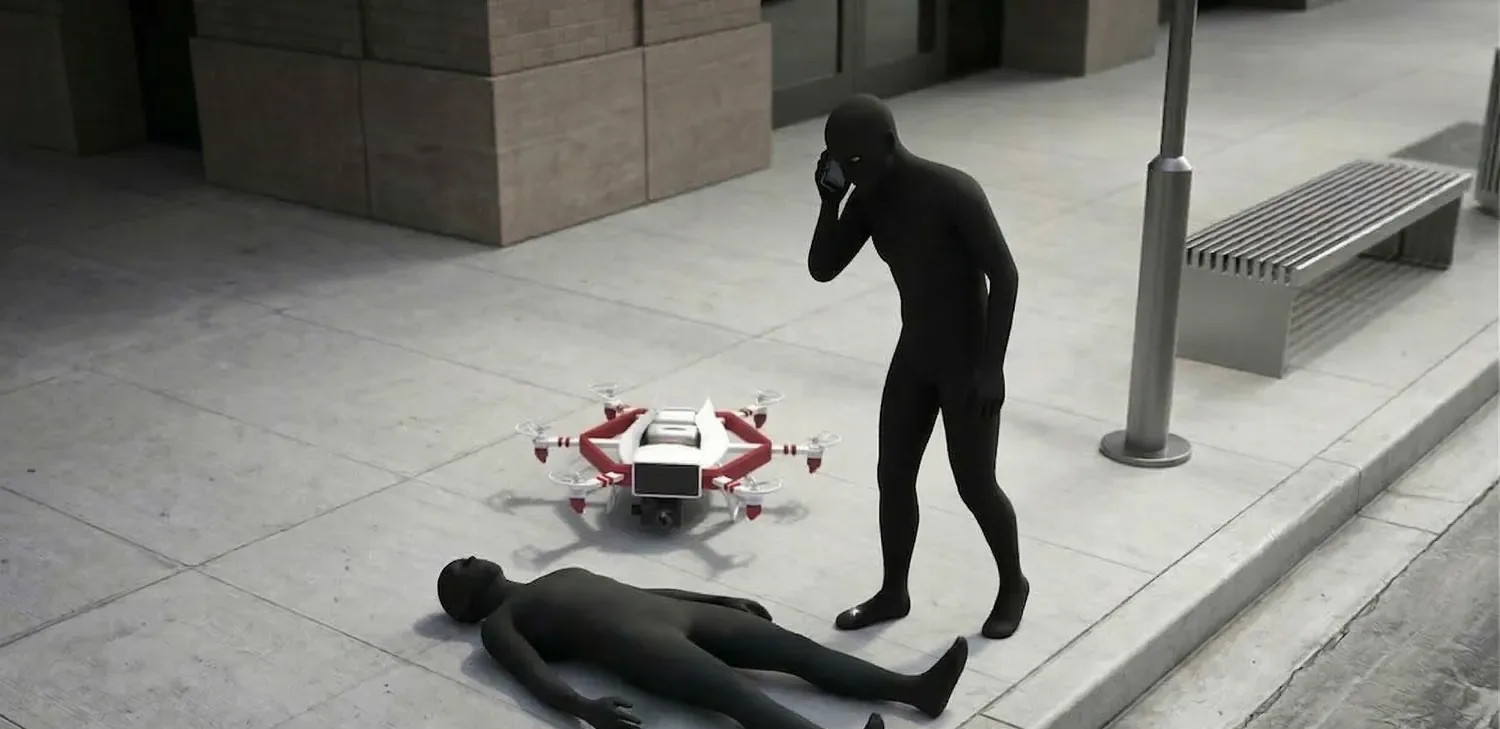
Every minute counts. Survival odds from cardiac arrest drop 7 to 10% for every minute without CPR or defibrillation, and severe bleeding can be fatal in as little as 3 to 5 minutes. In dense cities, ambulances get stuck in traffic. This concept turns the ambulance into a launch pad: two solar-charged drones ride on the roof, and the crew sends one ahead with life-saving supplies while the ambulance is still on its way.
From 911 Call to Help on the Scene
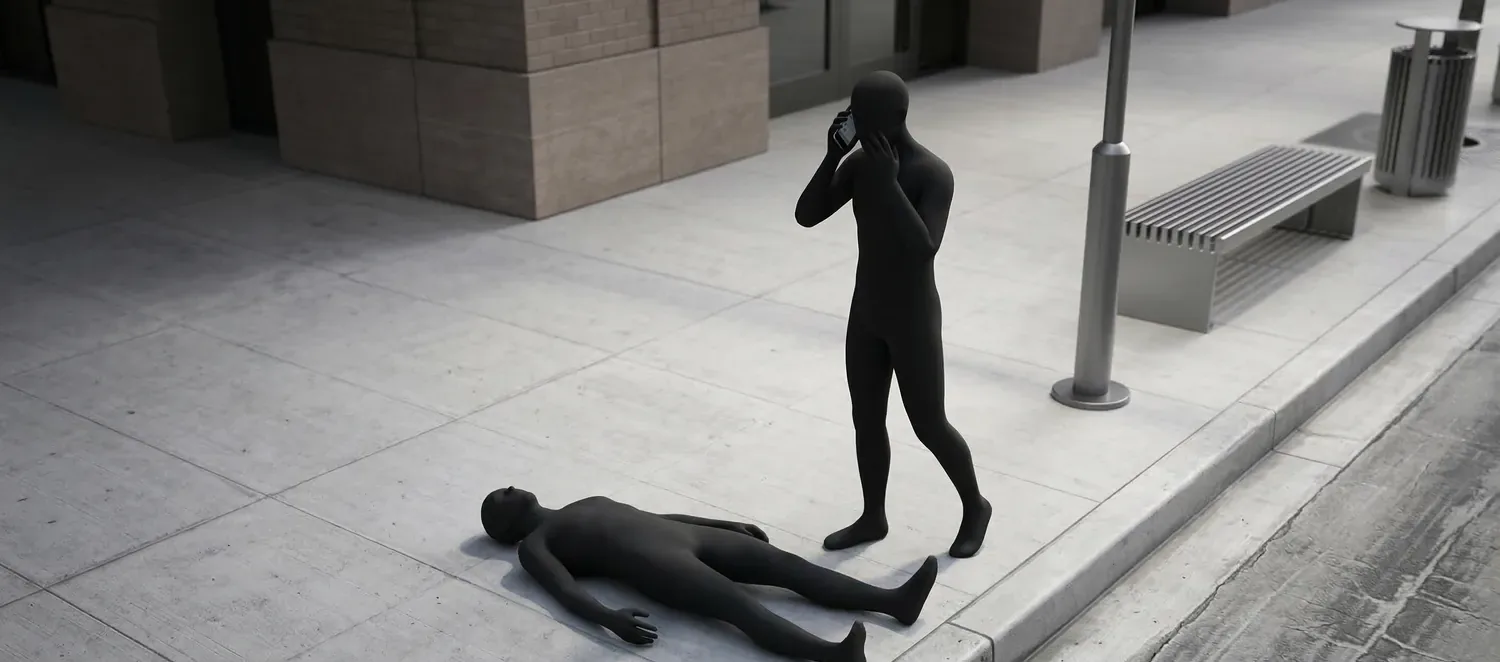
1. Emergency occursA 911 call comes in for cardiac arrest, an overdose, or severe bleeding.
2. Ambulance dispatchedThe closest ambulance heads out, but traffic and distance cause delays in dense urban areas.
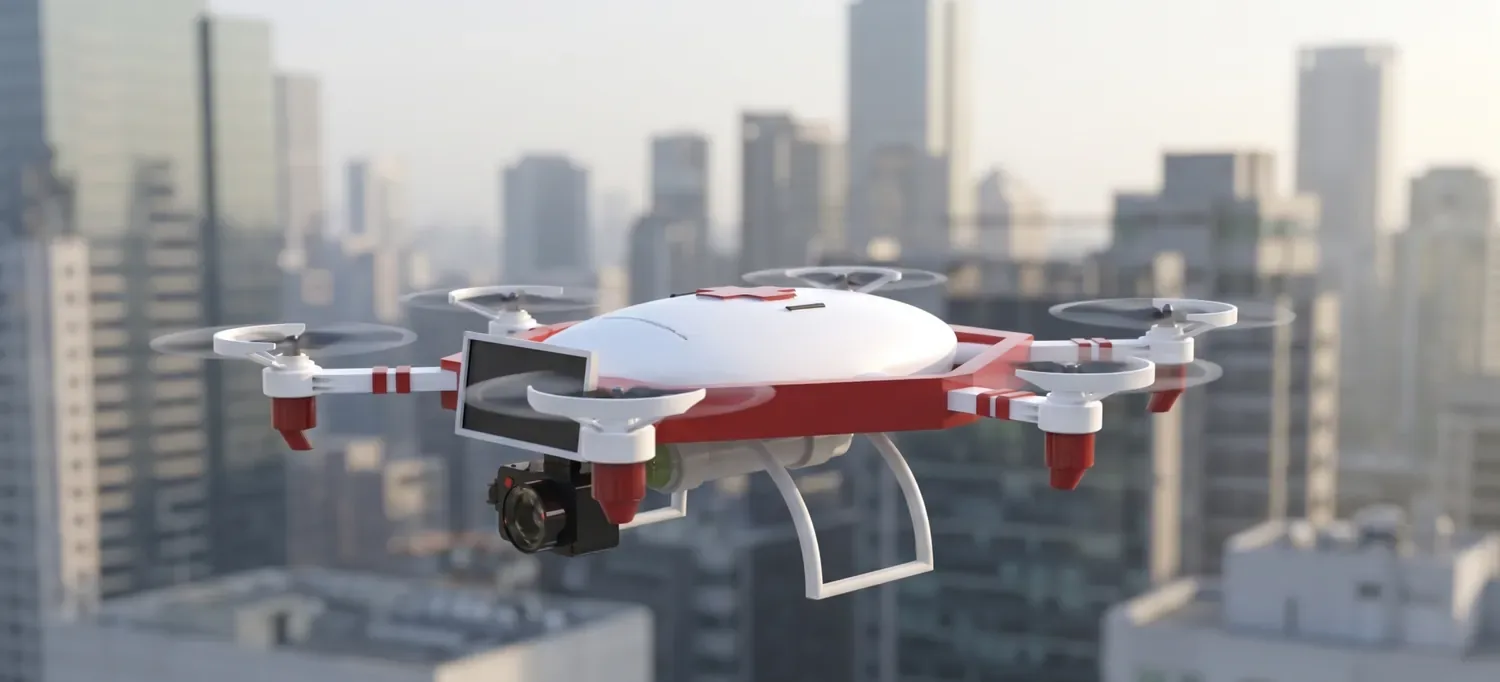
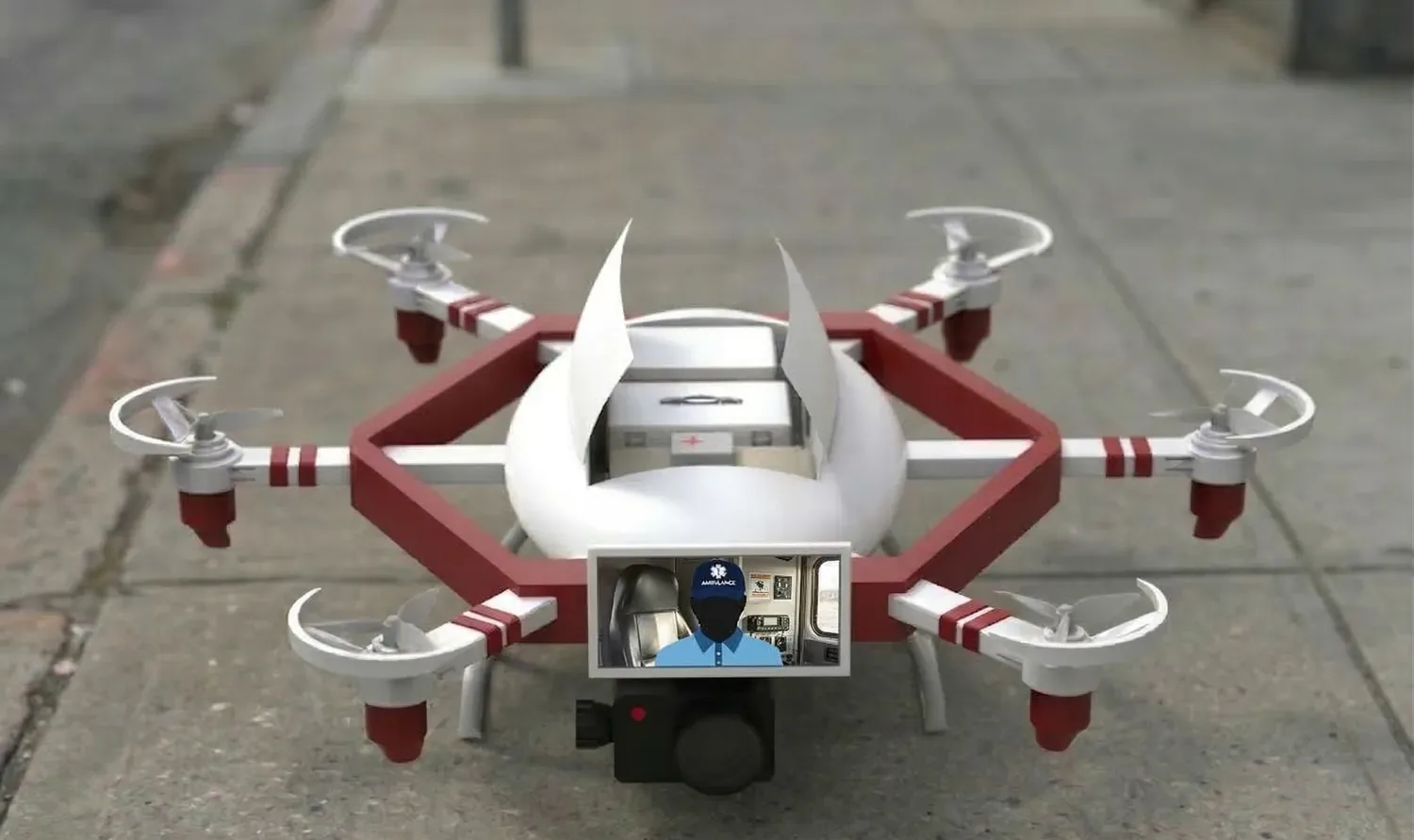
3. Drone launchedThe attendant who is not driving launches a drone from the roof and flies it with a remote control, guided by the drone’s screen and camera.
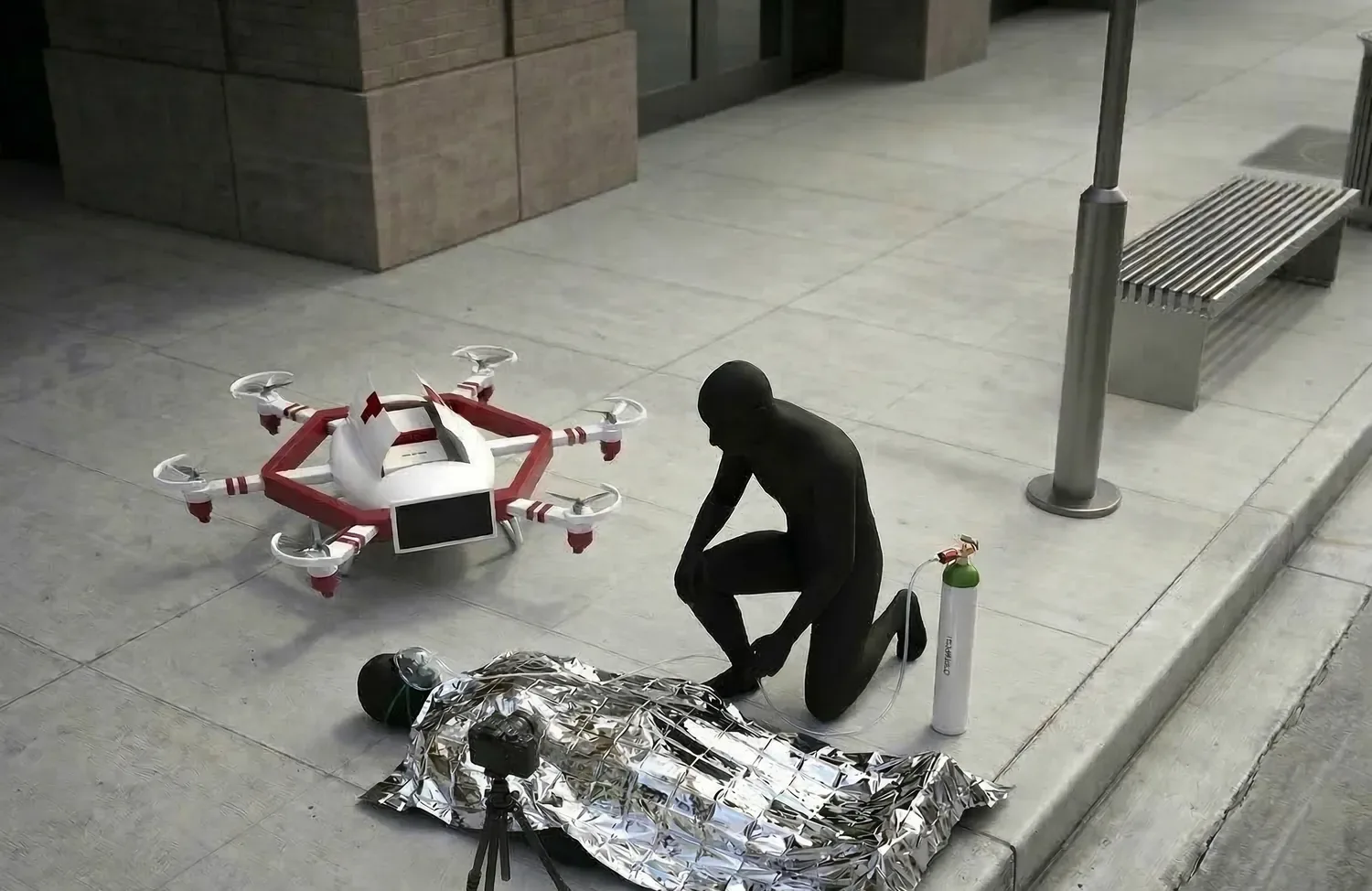
4. Life-saving deliveryThe drone beats the ambulance to the scene and delivers an AED, Narcan, oxygen, and a bleeding kit.
5. Bystander assistanceUsing the drone’s camera, screen, and two-way microphone and speaker, the attendant talks the bystander through each step until the ambulance arrives.
Faster, Cheaper, and Built to Scale
01
Solar powered
Solar panels on the ambulance roof recharge the drones between calls, so they are always ready. Each ambulance carries two drones in case one fails.
02
Wider, faster coverage
Ambulances are already spread across a city and always moving, so mobile drones create a wider, faster coverage network for life saving situations.
03
Anyone up front can fly
A detachable, quick-setup camera, screen, and mic let the non-driver fly the drone and lead someone through the steps until the ambulance arrives.
04
Cheap to teach
Teaching crews to fly the drones is inexpensive, and it needs no extra staff or new infrastructure.
05
Safe in dense cities
Flying below skyscraper height is safe and effective where people are hard to reach quickly.
06
Ready for rural areas
The same idea could work for spread-out rural communities where the nearest ambulance is far away.